Why AI Writing Drowns in Em Dashes (And How to Stop It)

Moe
·Updated ·6 min read
The Em Dash Epidemic in AI Writing
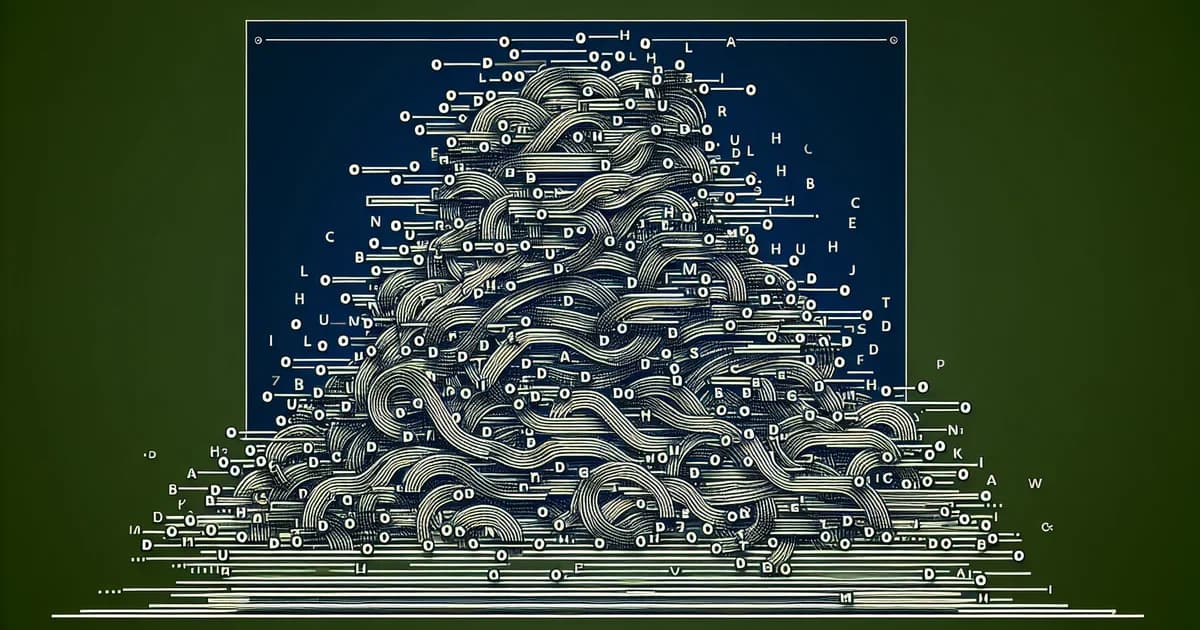
You've seen it everywhere. AI-generated content littered with em dashes like punctuation confetti. Every other sentence breaks apart with those double hyphens that scream "I was written by a machine." The ai em dash problem has become so pervasive that spotting AI content is often as simple as counting the dashes.
This isn't subtle. Claude drops em dashes mid-sentence to separate thoughts that could work perfectly fine with a period. GPT-4 uses them to introduce examples that would flow better with a colon. Even fine-tuned models trained on human writing somehow develop this habit.
The pattern is unmistakable. Human writers use em dashes sparingly, maybe once per article for dramatic effect. AI writers use them constantly, creating choppy, unnatural rhythm that feels like reading instructions rather than natural prose.
Training Data Patterns Behind AI Em Dash Overuse
The root cause traces back to training data selection. Large language models learn from massive text corpora that include academic papers, technical documentation, and formal writing samples. These sources use em dashes more frequently than casual writing because they follow strict style guides.
Academic writing employs em dashes to set off parenthetical information clearly. Technical documentation uses them to separate explanatory clauses from main points. Legal documents rely on them for precise clause separation. When you feed millions of these formal texts into a model, the overuse of llm em dash becomes inevitable.
The models don't distinguish between formal and casual contexts. They see em dashes as a universal solution for connecting ideas, regardless of whether the writing calls for academic precision or conversational flow.
Neural Pattern Recognition Gone Wrong
Language models identify em dashes as high-value connectors during training. The transformer architecture notices these punctuation marks consistently appear between related concepts across diverse text types. The model interprets this as a reliable pattern worth replicating.
But pattern recognition without context understanding creates problems. The AI learns that em dashes signal relationship between ideas without grasping when simpler punctuation works better. A period often serves the same function with cleaner results.
This ai writing em dash obsession reveals a deeper limitation. Models excel at identifying structural patterns but struggle with stylistic nuance. They recognize em dashes as grammatically correct without understanding they often sound robotic.
The Reinforcement Learning Problem
Human feedback during fine-tuning accidentally reinforces em dash usage. When reviewers see technically correct grammar, they approve the output even if it feels unnatural. The dash usage isn't wrong, just awkward.
Models interpret this approval as validation for their punctuation choices. Each positive rating for dash-heavy content strengthens the neural pathways that produce more dashes in future outputs.
Why Does AI Writing Overuse Em Dash So Consistently?
The consistency across different AI models points to fundamental architectural issues. Transformer attention mechanisms weight punctuation heavily when determining sentence structure. Em dashes create clear attention boundaries that help models organize complex thoughts.
From the model's perspective, em dashes solve multiple problems simultaneously. They separate clauses clearly, introduce examples effectively, and create breathing room in dense paragraphs. The AI doesn't recognize these benefits come at the cost of natural flow.
Temperature settings make this worse. Lower temperatures increase the likelihood of "safe" punctuation choices. Em dashes feel safe because they're rarely grammatically incorrect, even when stylistically poor.
The Cognitive Load Factor
Em dashes require more cognitive processing than periods or commas. Readers must mentally parse the relationship between separated clauses, creating micro-pauses that disrupt reading flow. Human writers instinctively avoid this unless the emphasis justifies the effort.
AI models don't experience cognitive load. They generate text without feeling the mental friction that excessive dashes create for readers. This disconnect produces writing that feels technically sound but exhausting to consume.
Spotting the Tell-Tale Signs
The ai em dash overuse creates distinct patterns you can recognize immediately. AI content typically uses 3-5 em dashes per 500 words, while human writers average less than one. The placement follows predictable patterns too.
AI models favor em dashes before examples, after introductory phrases, and around parenthetical information. They use them to separate items in lists where commas would work fine. They insert them between independent clauses that should be separate sentences.
The rhythm gives it away every time. Human writing flows with varied sentence lengths and natural breaks. AI writing with excessive dashes feels choppy and mechanical, like reading bullet points disguised as paragraphs.
Context Blindness
Models apply the same punctuation rules regardless of content type. They use em dashes in casual blog posts the same way they would in formal reports. This context blindness creates mismatched tone throughout the piece.
You'll find AI content using em dashes in creative writing where they kill narrative flow, in technical tutorials where they add unnecessary complexity, and in marketing copy where they sound pretentious.
Breaking the Em Dash Habit
Fixing AI's punctuation obsession requires explicit instruction during generation. Specify "use minimal punctuation" or "write conversationally" in your prompts. Many models will reduce dash usage when directed toward casual tone.
Post-generation editing helps too. Search for em dashes and replace most with periods or commas. Split dash-connected independent clauses into separate sentences. Convert dash-introduced examples to colon-led lists.
The nuclear option works when subtle approaches fail. Include "never use em dashes" in your system prompt. Models will find alternative punctuation that usually flows better anyway.
Training Better Habits
Custom fine-tuning can address em dash overuse permanently. Curate training data that emphasizes natural punctuation variety. Weight conversational writing samples more heavily than formal documentation.
Few-shot prompting works for immediate improvements. Provide examples of natural writing that uses periods and commas effectively. Models often mirror the punctuation patterns in your examples.
The Broader Punctuation Problem
Em dashes represent a larger issue with AI writing habits. Models develop quirks during training that persist across different use cases. Semicolon overuse, parenthetical addiction, and bullet point dependence all stem from similar pattern-matching problems.
These habits compound to create instantly recognizable AI signatures. Readers develop unconscious awareness of these patterns, reducing trust in AI-generated content even when the information is accurate.
The solution involves conscious counter-training. Explicitly model natural punctuation variety during development. Weight conversational text samples higher than formal documents. Penalize repetitive punctuation patterns during fine-tuning.
Your writing credibility depends on breaking these mechanical habits. Natural punctuation variation signals human authorship and maintains reader engagement. Clean up those dashes, and watch your content feel instantly more authentic.
Related Articles

AI Writing & Content
Why AI Sounds Like AI: The Perplexity Problem
AI models suffer from low perplexity. They pick the statistically safest word every time. That's why their output feels robotic. Here's what's actually happening.
Mar 29, 2026·7 min read
AI Writing & Content
AI Slop Is Everywhere. Shut The Fluff Up!
AI slop is the bloated, lifeless output that plagues every chatbot interaction. Here's what causes it and how to fight back.
Mar 29, 2026·8 min read