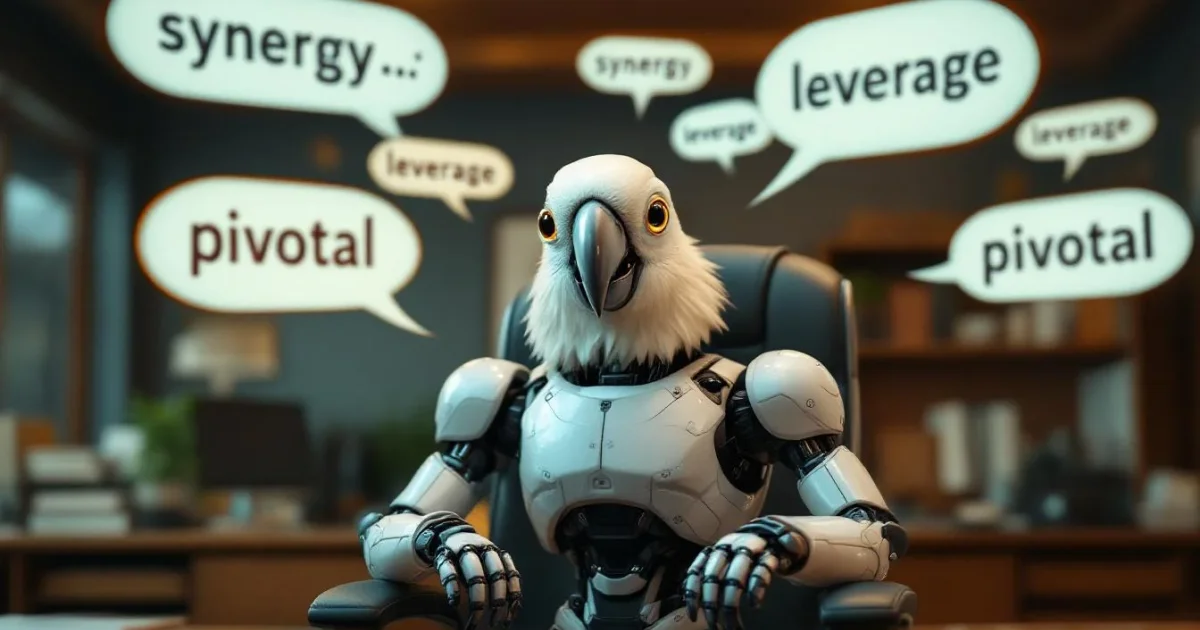
AI Burstiness: Why Your Model Writes Like a Robot

Moe
·Updated ·5 min read
What Is Burstiness Anyway?
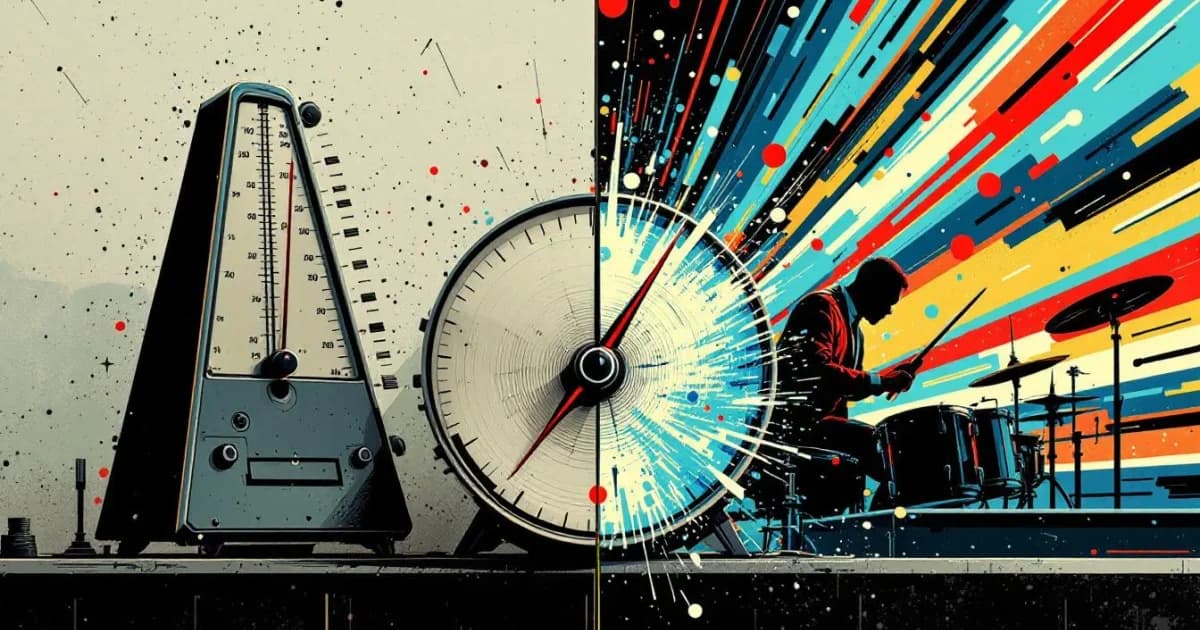
Burstiness is the rhythm of how you vary sentence length. Short. Then longer ones that give context and build ideas. Then punchy again. That variation is what makes writing feel alive.
A bursty writer mixes it up. Three words. Eighteen words. Seven words. Nine. The unpredictability keeps you reading. Your brain stays engaged because it can't predict the next sentence length.
A non-bursty writer settles into a pattern. Every sentence hovers around 15-18 words. Rhythm flattens. It sounds corporate, academic, or robotic. That's exactly how most AI models write right now.
Why AI Models Default to Low Burstiness
Language models are trained to predict the next token based on probability. They're optimizing for likelihood, not rhythm. The safest, most statistically common sentence length in training data falls somewhere in the middle. Around 12-20 words.
So what happens? The model learns to default there. It's not lazy. It's statistical. The model sees that most sentences in its training data cluster around that length, so it keeps generating within that zone. High burstiness requires breaking the pattern, which feels riskier from a probability standpoint.
Here's the thing: training data matters. If you train on academic papers, legal documents, and technical documentation, you get long, careful sentences. If you train on Twitter, Reddit, and chat logs, you get more burstiness. Most large language models train on a mix heavy on formal text.
The model isn't trying to sound boring. It's following the statistical path of least resistance.
The Human Burstiness Pattern
When humans write, we're not thinking about sentence length. We're thinking about impact. We lead with the point. Sometimes that's one word. Sometimes it takes thirty words to set up the context you need.
Look at how you text a friend. "No." "That's insane." "I can't believe they actually shipped it without testing." You're varying length naturally because you're trying to land different kinds of thoughts. A rejection needs to hit fast. An explanation needs room.
Good writers develop this instinct. Journalists know it. Fiction writers know it. Marketing copy that actually converts knows it. The rhythm draws the eye forward. Burstiness is part of what separates readable writing from writing that makes you tired.
Human writing has high burstiness because language works better that way. Your brain expects variation. Monotony feels wrong.
How to Spot Low Burstiness in AI Output
Read a paragraph from an AI model. Count the words in each sentence. Plot them mentally. Notice a pattern?
Low burstiness AI reads like this: "The implementation of machine learning models in enterprise environments requires careful consideration of several factors. These factors include data quality, computational resources, and team expertise. Organizations should evaluate their current infrastructure before selecting an appropriate framework. This approach minimizes risk and ensures long-term sustainability."
Every sentence is roughly the same length. 15 words. 14 words. 16 words. 17 words. The rhythm is dead. You feel it even if you can't name it.
Compare that to human writing on the same topic: "Deploying ML in enterprise is hard. Really hard. You need clean data, serious compute, and people who actually know what they're doing. Most teams skip one of those. Then everything breaks."
Short. Medium. Long. Short. The variation forces you to stay present. You can't skim it on autopilot.
Why This Matters for AI Credibility
People can feel low burstiness without knowing what to call it. You've probably read AI-generated content and thought, "Something's off here." This is why. The flatness trips a wire in your brain that says, "This isn't written by a human."
It kills engagement. Readers bounce. They perceive the writing as lower quality even if the facts are solid. The rhythm sends a subconscious signal: robotic, corporate, untrustworthy.
For anyone trying to pass AI content off as human-written, low burstiness is a dead giveaway. For anyone trying to improve their AI outputs, burstiness is one of the easiest high-impact fixes. It's not about fancier prompts. It's about sentence structure.
How to Add Burstiness to AI Output
If you're using an AI model directly, you can prompt for it. "Write this in a more conversational, punchy style." "Vary your sentence length. Mix short sentences with longer ones." "Make it sound like a person, not a robot." The model can do it, but it has to be told.
The real solution? Post-edit. Have a human read the AI output and break up those flat paragraphs. Add short sentences for punch. Combine some longer sentences for flow. Ten minutes of editing can make an AI draft feel 80% more human.
Another approach: fine-tune on examples with high burstiness. If you train a model on more bursty writing, it learns the pattern. This works if you have the resources and data.
The simplest hack: manually edit your prompts to show examples. If your prompt includes reference text that's highly bursty, the model mimics it. Context priming works. The model will match the style of text you give it as reference.
The Future of AI Writing Quality
As AI models get better, burstiness will probably improve naturally. Newer training methods and larger datasets with more human-written text will shift the distribution. Models will learn burstiness as an implicit pattern rather than requiring explicit instruction.
But we're not there yet. Right now, if you want your AI content to feel human, burstiness is non-negotiable. It's not a luxury edit. It's the difference between writing that lands and writing that gets scrolled past.
The gap between human and AI writing isn't really about vocabulary or accuracy. It's about rhythm. Fix the rhythm, and everything else starts to feel more real.
Related Articles

AI Writing & Content
Why AI Sounds Like AI: The Perplexity Problem
AI models suffer from low perplexity. They pick the statistically safest word every time. That's why their output feels robotic. Here's what's actually happening.
Mar 29, 2026·7 min read
AI Writing & Content
AI Slop Is Everywhere. Shut The Fluff Up!
AI slop is the bloated, lifeless output that plagues every chatbot interaction. Here's what causes it and how to fight back.
Mar 29, 2026·8 min read