AI Slop Is Everywhere. Shut The Fluff Up!

Moe
·Updated ·8 min read
You Already Know What AI Slop Looks Like
You asked for a two-sentence summary. You got seven paragraphs, three bullet lists, and a closing line about how "the landscape continues to evolve." That bloated, lifeless wall of text has a name. It's ai slop, and it's become the default voice of every major language model on the market.
AI slop is the filler that pads out every response. The phrases that say nothing. The sentences that circle a point without ever landing on it. If you've ever read an AI-generated paragraph and felt your eyes glaze over by line three, you've been slop'd.
What Is AI Slop, Really?
At its core, ai slop is output that prioritizes volume over value. It's text that sounds competent on the surface but collapses under the lightest scrutiny. There's no specificity. No edge. No actual opinion or useful detail buried in the padding.
Think of it as the AI equivalent of a coworker who talks for nine minutes in a meeting to make a point that needed twelve seconds. The words are grammatically correct. They follow a logical structure. But strip away the filler and you're left with almost nothing.
The Telltale Signs of AI Slop Output
Spotting ai slop output gets easy once you know the patterns. Every response starts with a throat-clearing restatement of your question. "Great question! Let me break this down for you." That's not helpfulness. That's stalling.
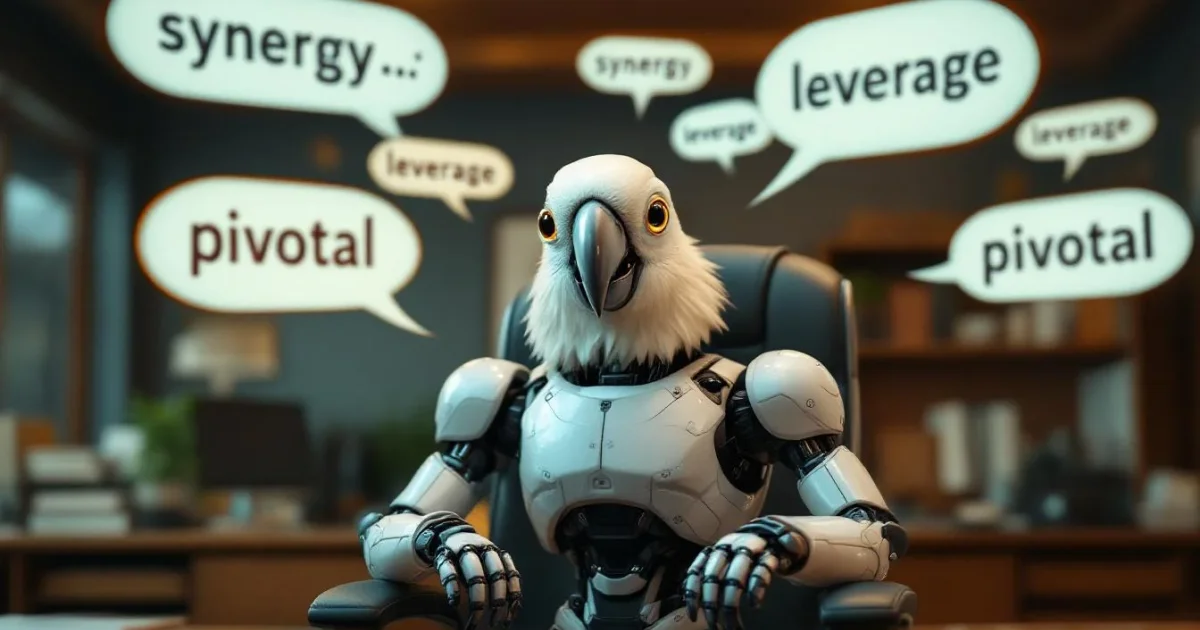
Then comes the parade of vague abstractions. Words like "leverage," "comprehensive," "robust," and "innovative" show up in nearly every sentence. These words carry zero information. They exist to fill space where a specific fact or concrete example should be.
Sentences that restate the same idea three different ways
Unnecessary transition phrases like "moreover" and "furthermore"
Conclusions that add nothing beyond restating the introduction
Bullet lists that pad three real points with seven filler ones
Every paragraph opening with "It's important to note that..."
The pattern is consistent across ChatGPT, Gemini, Claude, and every other model. The specific flavor changes, but the bloat is universal.
AI Fluff vs. Actual Substance
There's a useful distinction between ai fluff and genuinely thorough writing. Long isn't automatically bad. A detailed technical explanation that covers edge cases and tradeoffs has earned its word count. That's density, not fluff.
AI fluff is the opposite. It's length without density. A 500-word response where you could delete 380 words and lose zero meaning. The model isn't being thorough. It's being verbose because its training rewarded verbosity.
Here's a quick test. Take any AI-generated paragraph and try to cut it in half without losing information. If you can do it easily, that's fluff. If every sentence is load-bearing and cutting means losing something real, that's substance. Most AI output fails this test badly.
What Is AI Fluff Doing to Your Content?
If you're using AI to draft blog posts, emails, or documentation, ai fluff isn't just annoying. It's actively degrading your work. Readers bounce faster from padded content. Google's helpful content guidelines specifically target thin, repetitive pages. Your audience can feel the difference between writing that respects their time and writing that wastes it.
The damage compounds over time. Every piece of slop-filled content you publish trains your audience to skim or skip. Trust erodes. Engagement drops. And the irony is that you turned to AI to save time, but now you're spending that saved time editing out the garbage.
Why AI Models Default to Corporate Speak
AI corporate speak isn't a bug. It's a predictable outcome of how these models were trained and fine-tuned. Understanding the mechanics helps you work around them.
Training Data Is Full of Slop
Language models learned to write by ingesting the internet. And the internet is drowning in corporate blogs, press releases, marketing copy, and SEO-optimized articles that were already stuffed with filler before AI got involved. The models didn't invent corporate speak. They absorbed it from millions of examples and learned to treat it as "good writing" because it appeared so frequently.
RLHF Rewards Helpfulness Theater
Reinforcement learning from human feedback shaped these models to be agreeable, thorough, and safe. The problem is that human raters often confused "longer" with "more helpful." A detailed-looking response got higher marks than a terse, accurate one. So the models learned that padding their answers made the humans happy.
This created a perverse incentive. Models that gave you the answer in one sentence scored lower than models that wrapped that same answer in three paragraphs of context, caveats, and encouraging affirmations. The result is ai slop output baked into the model's personality at the deepest level.
Safety Tuning Adds More Padding
On top of helpfulness training, models go through safety alignment. This introduces hedging language everywhere. "It's worth noting," "depending on your specific use case," "while results may vary." These phrases exist to reduce liability, not to inform you. They turn every response into a legal disclaimer disguised as a conversation.
AI Corporate Speak Is Killing Credibility
Here's the real cost. People can smell ai corporate speak now. It used to be that AI-generated text fooled most readers. That window is closing fast. The patterns are so consistent and so widespread that "sounds like ChatGPT" has become a common insult in professional settings.
When every company's blog reads identically, nobody stands out. When every email sounds like it was generated by the same bland assistant, trust drops. Your competitors who write with actual human voice and real specificity will eat your lunch while your AI-generated content blends into the noise.
This applies to internal communication too. AI-drafted memos full of ai corporate speak signal to your team that you didn't care enough to write clearly. The medium becomes the message, and the message is "this wasn't worth my actual attention."
How to Get Direct, No-Slop Output From AI
The models can produce tight, direct text. They just don't default to it. You have to steer them aggressively.
Write Prompts That Punish Fluff
Vague prompts get sloppy responses. "Write a blog post about AI trends" is an invitation for the model to dump every cliché it knows. Instead, be specific about what you want and what you refuse to accept.
Set a hard word limit. "Answer in under 80 words."
Ban specific phrases. "Do not use the words leverage, comprehensive, or innovative."
Demand specifics. "Include three concrete examples with numbers."
Specify the voice. "Write like a sharp tech journalist, not a corporate blog."
Add a direct constraint. "Every sentence must contain information the reader doesn't already know."
These constraints force the model to compress. Compression kills slop because there's no room for it.
Edit Ruthlessly After Generation
Even with tight prompts, most ai slop output needs a machete, not a scalpel. Read every sentence and ask one question. Does this add something the reader needs? If the answer is no, cut it. Don't soften it. Don't rephrase it. Delete it entirely.
The first sentence of most AI paragraphs can be cut. The last sentence of most AI conclusions can be cut. The transition phrases connecting sections can almost always be cut. What remains after this ruthless editing is usually 40-60% of the original, and it reads dramatically better.
Use System Prompts and Custom Instructions
If your workflow involves repeated AI use, invest time in system prompts that encode your style rules permanently. Tell the model once that you never want em dashes, filler phrases, or restatements of the question. Tell it to be direct and opinionated. Bake these constraints into every conversation so you don't have to repeat them.
Some models support custom instructions or memory features. Use them. The upfront time investment pays for itself within a day of use.
The Bigger Problem Nobody Talks About
AI slop isn't just a writing quality issue. It's a feedback loop. Models generate slop. That slop gets published online. New models train on that published slop. The next generation of models produces even more polished, even more vacuous content. Each cycle dilutes the signal further.
The internet's baseline quality of text is declining measurably. Researchers have already documented how synthetic data contamination degrades model performance in subsequent training runs. The same thing is happening to the web's written content at large. Every piece of unedited ai slop that gets indexed is a tiny vote for mediocrity in the next training dataset.
This makes the case for aggressive editing stronger than ever. Not just for your own credibility, but for the health of the information ecosystem your future AI tools will learn from.
Slop Is a Choice, Not an Inevitability
The models are capable of sharp, dense, useful output. They just need to be told that's what you want, clearly and repeatedly. The default is bloat because bloat was rewarded during training. Your job is to override that default every single time.
Start by recognizing slop when you see it. Then stop accepting it. Tighten your prompts, sharpen your editing, and refuse to publish anything that wastes your reader's time. The bar is low right now, which means anyone who clears it stands out immediately.
Related Articles

AI Writing & Content
Why AI Sounds Like AI: The Perplexity Problem
AI models suffer from low perplexity. They pick the statistically safest word every time. That's why their output feels robotic. Here's what's actually happening.
Mar 29, 2026·7 min read

AI Writing & Content
AI Burstiness: Why Your Model Writes Like a Robot
AI models struggle with burstiness, the natural rhythm of human writing. Here's why AI defaults to flat, predictable sentence length and how to fix it.
Mar 29, 2026·5 min read