The AI Revolution Started on November 30, 2022. Here's Why

Moe
·Updated ·4 min read
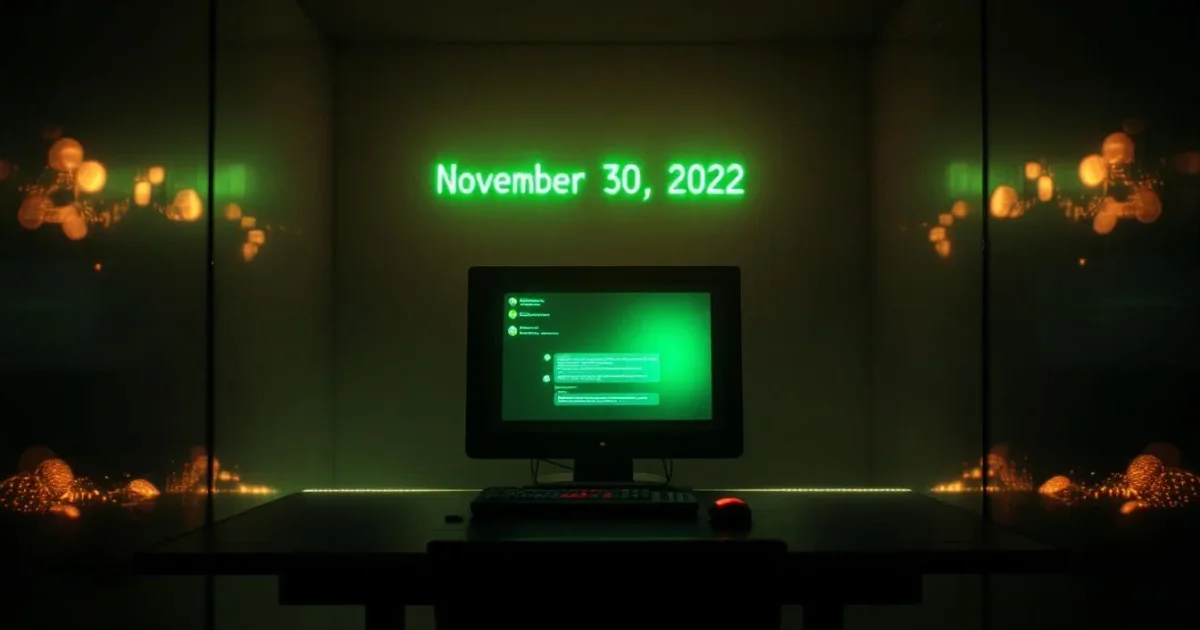
The Day Everything Changed
November 30, 2022. That's when the AI revolution officially started. Not with a research paper or a conference keynote. OpenAI dropped ChatGPT with zero fanfare and watched the internet lose its collective mind.
Within five days, one million users signed up. By January 2023, ChatGPT had 100 million monthly active users. For context, TikTok took nine months to hit that milestone. Instagram took two and a half years.
This wasn't just another app going viral. This was the birth of AI as a consumer technology. The moment when artificial intelligence stopped being a lab curiosity and became something your mom could use to write thank-you notes.
Large Language Models Hit the Mainstream
Before ChatGPT, large language models were academic toys. GPT-3 existed since 2020, but you needed an API key and technical knowledge to access it. Most people had never heard of OpenAI.
ChatGPT changed that overnight. Suddenly, anyone with a web browser could have conversations with an AI that felt almost human. The interface was dead simple. Type a question, get an answer. No prompt engineering required.
The technology behind it wasn't revolutionary. The packaging was. OpenAI took the same transformer architecture that powered GPT-3 and wrapped it in something that felt like texting with a genius friend.
Within weeks, everyone was experimenting. Students writing essays. Lawyers drafting contracts. Developers debugging code. Poets generating verses. The start of ChatGPT marked the moment when AI became democratized.
The Panic and the Gold Rush
The reaction split into two camps. Tech optimists saw the future arriving ahead of schedule. AI pessimists saw the apocalypse in a chat window.
Schools banned ChatGPT within weeks. Teachers couldn't tell if essays were human-written anymore. Stack Overflow temporarily banned AI-generated answers because they were flooding the platform. The origin of LLMs as mainstream tools created instant chaos in education and knowledge work.
Meanwhile, venture capitalists went into overdrive. If a startup mentioned AI in their pitch deck, they got meetings. If they didn't, they got ignored. Suddenly every company needed an AI strategy. Every product needed AI features.
The birth of AI as a consumer phenomenon triggered something bigger than the dot-com boom. At least with websites, you could see what you were building. With AI, you were chasing something that seemed to get smarter every month.
Microsoft, Google, and the New Arms Race
Microsoft saw the opportunity first. In January 2023, they announced a multi-billion dollar partnership with OpenAI. Then they integrated ChatGPT into Bing. For the first time in a decade, Google's search dominance looked vulnerable.
Google panicked. They rushed out Bard in February 2023. It immediately gave a wrong answer in the demo, wiping $100 billion off Alphabet's market cap in a single day. The pressure to compete was so intense that Google broke their own careful rollout playbook.
Every major tech company followed. Meta released LLaMA. Anthropic launched Claude. Amazon invested in Anthropic. Microsoft added Copilot to Office. The AI revolution wasn't just about ChatGPT anymore. It was about every company scrambling to avoid being left behind.
The race wasn't just about better models. It was about infrastructure. Training these systems required massive compute resources. Nvidia's stock price tripled. Cloud providers couldn't build data centers fast enough.
Why This Moment Mattered More Than Others
AI breakthroughs happen regularly. Deep Blue beat chess grandmaster Garry Kasparov in 1997. AlphaGo defeated Lee Sedol in 2016. GPT-3 showed impressive language abilities in 2020. None of them triggered the same reaction as ChatGPT.
The difference was accessibility. Previous AI milestones were demonstrations. ChatGPT was a product. You didn't need to understand neural networks or transformer architectures. You just needed to know how to type.
The timing was perfect too. Remote work had normalized digital-first interactions. People were comfortable with chat interfaces. The technology was mature enough to be useful but novel enough to feel magical.
Most importantly, ChatGPT crossed the uncanny valley. It was good enough that you forgot you were talking to a machine. Not perfect, but convincing enough to suspend disbelief. That psychological shift changed everything.
The New Normal
Eighteen months later, AI assistants feel routine. ChatGPT has competitors. Every major software product has AI features. The initial panic about job displacement settled into pragmatic adaptation.
But the revolution that started on November 30, 2022 is still accelerating. LLMs keep getting more capable. Multimodal models can process images and video. AI agents can take actions on your behalf. The origin of LLMs as consumer tools was just the beginning.
The AI revolution didn't start with some theoretical breakthrough in a research lab. It started when OpenAI made advanced AI feel as natural as sending a text message. That's the day artificial intelligence became part of everyday life. Everything since then has been aftershocks.